Skip to the case study

All case studies

Jill Low

Product Designer, UX/UI & Front-end Coder

Case study · Online store onboarding Senior UI/UX Designer, StoreHub Nov 2018 to Dec 2020

Cutting online store setup from fifteen days to four steps

StoreHub had let merchants publish an online store since November 2018. Almost two years later, only 13.3% of accounts ever had. The checklist between a merchant and their store required everything before it allowed anything, so we cut what was required down to four steps and left the rest as encouragement instead of a gate.

01

What the online store was

StoreHub sold a point of sale system to merchants across South East Asia. The BackOffice behind it handled inventory, reporting, and everything else a merchant needed day to day. The online store was newer: the same product catalogue, publishable on the web, giving merchants visibility and control over both their offline and online sales from one place.

I worked on BackOffice and the online store together with our product manager. The first thing we both noticed was how few merchants ever actually published one.
02

Only 13% of merchants ever published

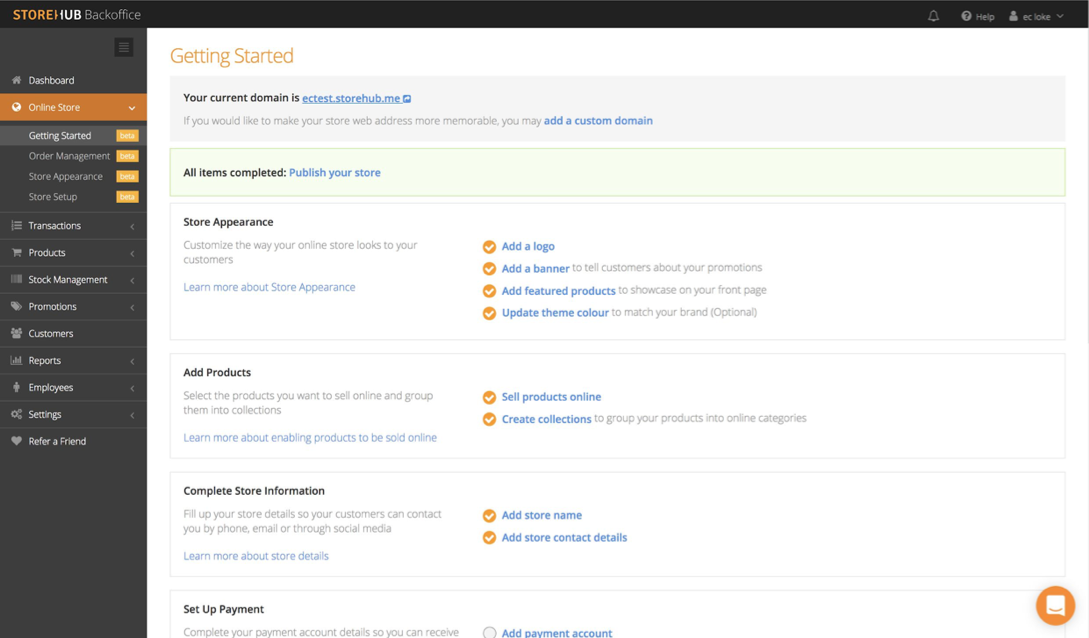
The reason wasn't hard to find once we read the checklist itself. Merchants had to finish every item on it before the publish button did anything, and most stalled out partway through:

  • 76% hadn't added a logo
  • 83% hadn't given their store a name or contact email
  • 85% hadn't given a phone number
  • 84% hadn't uploaded the required banner
  • 91% had fewer than 10 products listed
  • 84% hadn't created a collection, our name for a category
  • 87% hadn't set up a shipping zone

On average it took a merchant 15.29 days to publish, when they published at all. We set three goals: raise the publish rate, cut the time it took to get there, and help merchants reach their first five transactions faster.

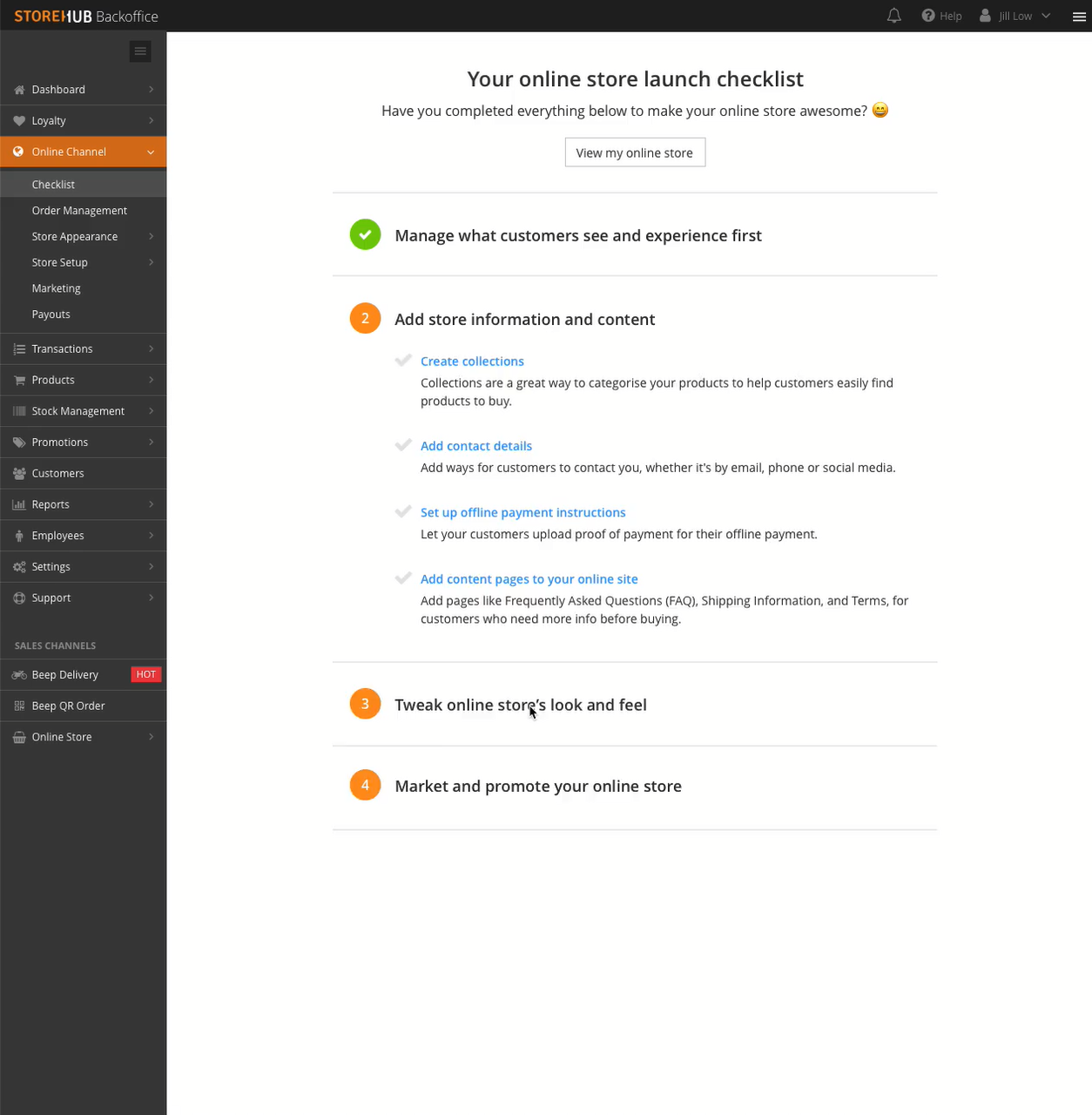
The old checklist. Every step had to be finished, in order, before a merchant could publish.
03

Four required steps, not eleven

We went back through the list and asked which items actually needed to block publishing. Almost none of them did. We narrowed it to four:

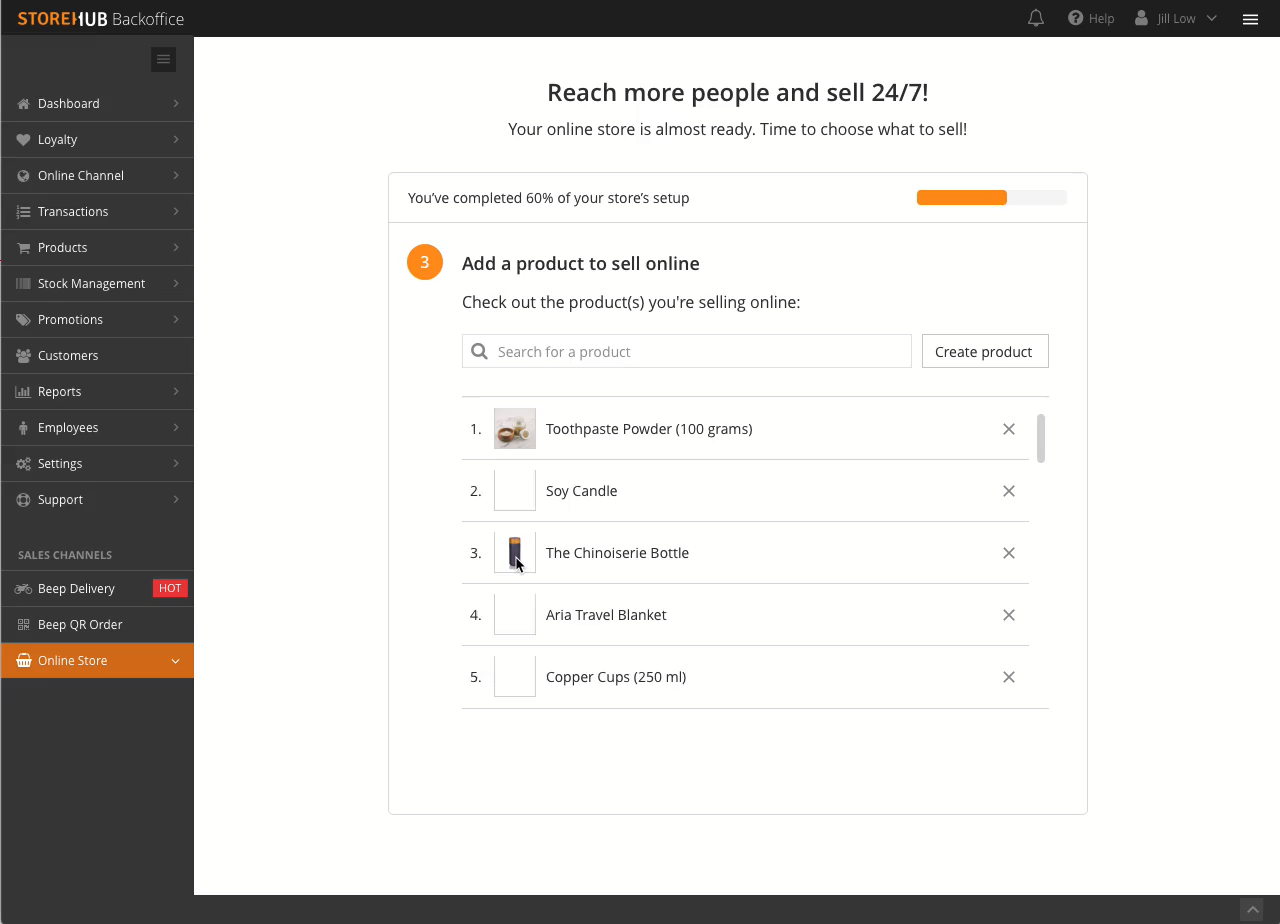
  1. Name the online store
  2. Choose which outlets are available online, for merchants with more than one
  3. Add or create products for the store
  4. Enter bank details for weekly disbursements

Everything else on the old checklist stayed, but as something to finish after launch rather than before it. We kept it visible so merchants would still complete it, without letting it block anyone who hadn't gotten to it yet.

We also added a small reminder in the BackOffice dashboard for the handful of settings that could actually break an online store if left off. It disappeared as soon as the merchant fixed the setting, and it only ever covered essential items, so it wouldn't turn into background noise merchants learned to ignore.

The shortened setup, and the checklist once it stopped blocking anyone.
04

Five times more stores published

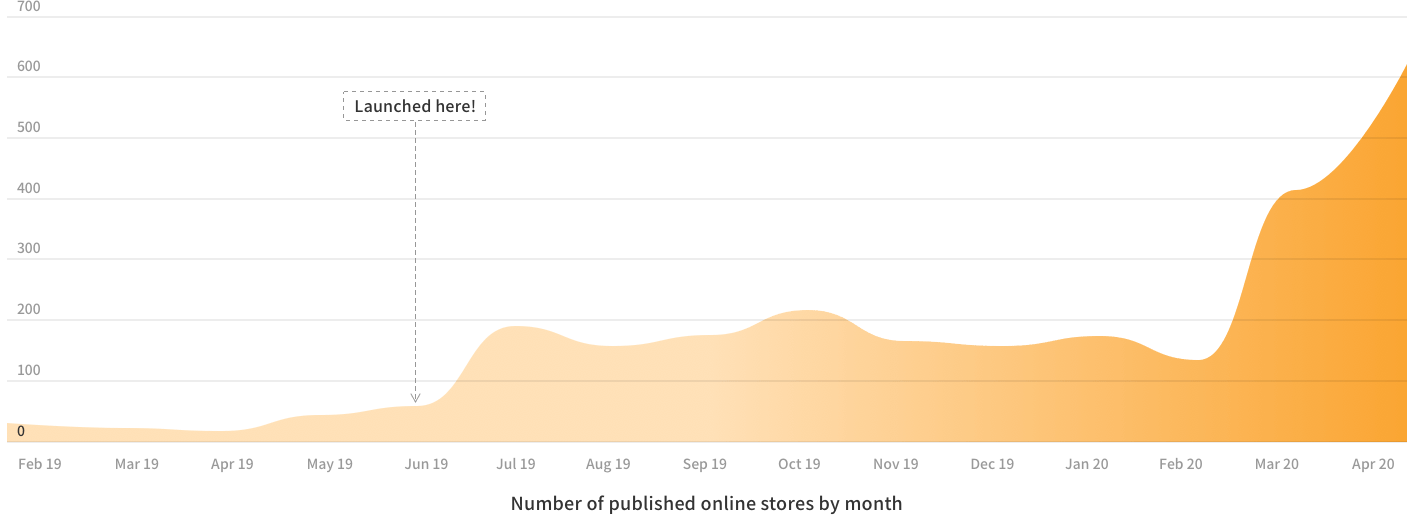
After launch, published online stores increased five times over. The average time to publish dropped 77.6%, down to 3.43 days.

A few things became clear once we could see the pattern:

  1. There was a jump in leads from small and medium businesses that wanted to sell online but didn't know where to start.
  2. Merchants who had the drive to finish setup were far more likely to actually do it, once the setup itself stopped being the obstacle.
  3. Making it easy to publish a store didn't make it easy to get customers to it. Many merchants still had no idea how to drive traffic online, which takes a different approach than marketing a physical shop.

That third point became its own project.

Line chart of published online stores by month, rising slowly from February 2019 through the first quarter of 2020, then climbing sharply from around April 2020 onward.
Published online stores by month. The steep climb from April 2020 also overlaps with Malaysia's COVID lockdown, when far more merchants needed to sell online.